
So look, I’ve been using AI pretty much every single day for the past couple years at this point and I think most people are completely missing what’s actually happening here. Like they’re using ChatGPT or Claude or whatever to write an email or ask a quick question and then they just close it and move on with their day. And that’s fine I guess if you just want to stay exactly where you are right now.
But I genuinely think we’re at this inflection point that most people aren’t seeing yet or maybe they see it but they don’t really get it you know?
This isn’t just a cool new tool. This is the next operating system. And I don’t mean that like metaphorically or whatever—I mean I think AI is literally going to replace Windows and Mac OS and all of that. Not tomorrow obviously but that’s where we’re heading.
Think about it. You’re not going to open up a bunch of programs and click around with a mouse forever. You know what I mean? You’re just going to tell your AI what you need and it’s going to go do it. Write the code, connect to whatever APIs it needs, create the PowerPoint or the document or post the thing to Twitter or whatever. It’ll just handle it.
Video games and some specialized stuff will probably still need traditional interfaces I guess, but for most of what we do day to day? We’re moving away from screens and keyboards and mice. It’s going to be way more voice-focused and just telling the computer what you need and having it actually go do the things.
And I think the people who understand that now, who treat their AI like what it’s becoming instead of just what it is today, those are the people who are going to absolutely dominate over the next decade. The ones who are building that relationship and that context now while everyone else is just using it like a fancy Google search.
How I Even Got Here
So I want to give you some context because I think it matters for understanding why I’m so into this.
Back in the ’90s—like way back—I used to mess around with these super primitive chatbot programs. You know the ones where the programmer literally had to type in every single possible question someone might ask and then type in the response? It was so limited and clunky but even back then I could kind of see where this might be heading eventually.
I’ve always been that person who looks at technology and tries to extrapolate forward you know? Like I don’t just see what something is right now, I try to see what it’s becoming or what it could become. Maybe that’s just because I’ve always been really into technology and efficiency and getting things done faster and better but I don’t know, it just clicks for me.
So when ChatGPT came out—I mean really when 3.5 Turbo came out because ChatGPT 2 was still pretty dumb—that was when it clicked for me that okay we’ve actually crossed a threshold here. These things can legitimately be useful partners now, not just toys or whatever.
And because I’m obsessed with efficiency and doing things better, AI just made sense to me immediately. Instead of me sitting there trying to figure out the perfect way to phrase something or organize my thoughts or write something, I could just give the AI my raw ideas and let it put them together logically. And honestly it does a better job than I can in a lot of cases which people call “AI slop” right now but I mean come on, how is that any different from all the successful people who’ve hired ghostwriters for decades? It’s not. It’s just that now everyone can have that assistant instead of just rich people.
Okay So Here’s The Thing Everyone Gets Wrong
Most people treat AI like a one-night stand instead of a marriage. That’s the best way I can describe it I think.
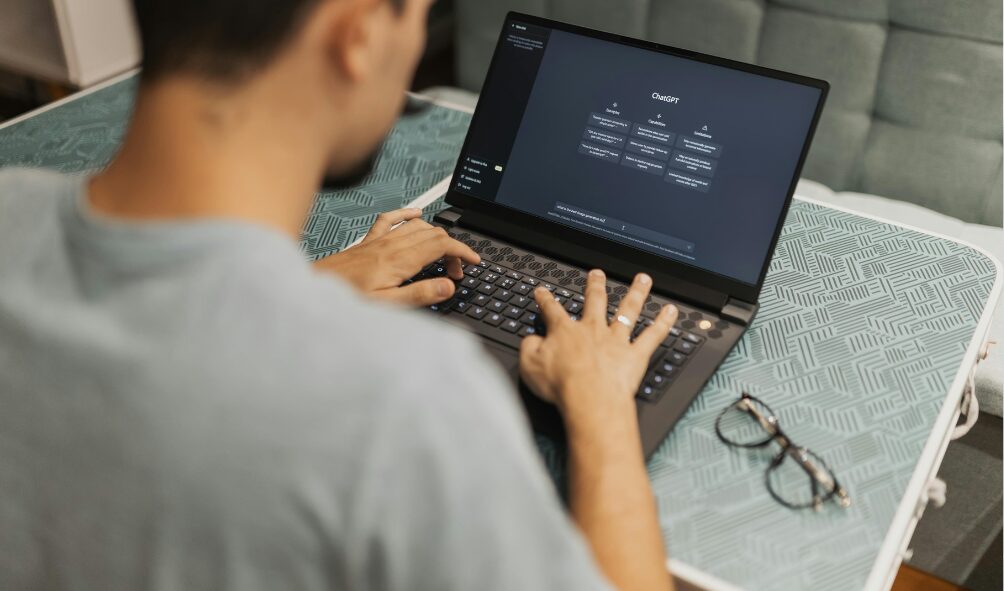
They open ChatGPT, ask one question, get an answer, close the tab. Come back tomorrow, start completely fresh. No context, no memory, no relationship. Just transaction after transaction.
That’s insane to me. Like completely backwards.
Your AI should know you better than almost anyone else in your life eventually. And before you say that’s creepy or dystopian or whatever—is your doctor creepy for knowing your medical history? Is your therapist invasive for remembering what you talked about last session? Is your best friend weird for knowing your dreams and your failures and all that stuff?
No. Context makes everything better. Personalization makes everything actually useful.
So that’s the first thing I’d tell anyone—you need to treat your AI like a second brain that’s going to grow with you for the rest of your life. Not like a tool you use occasionally.
Setting Up Custom Instructions (And Actually Maintaining Them)
Every AI platform now has custom instructions or system prompts or whatever they call it. ChatGPT has it, Claude has it, they all have some version. And this isn’t optional you know? Like this is essential to making any of this actually work for you.
But here’s what nobody tells you and what I learned the hard way—setting them up once isn’t enough at all. Your custom instructions are a living document. They should be evolving constantly.
The way I think about it is like this: whenever the AI does something that annoys me, that becomes a line in my custom instructions. Maybe it’s too wordy or it’s not direct enough or it uses phrases I hate or whatever. I add “don’t do this thing” to the instructions.
And whenever it does something I love, something that makes me think “yes that’s exactly what I needed,” that also goes in. “More of this.” “Use this tone.” “This format was perfect.”
Over time you’re basically training your AI to be your AI. Not the generic version everyone else is talking to. Yours. Personalized to how you think and communicate and what you actually need.
I think a lot of people set their custom instructions once and then never touch them again and that’s just leaving so much value on the table.
You Need To Feed It Everything About Yourself
So before AI models had built-in memory—which honestly wasn’t that long ago—I used to keep this text file. Just a document with important information about me. My goals, my background, preferences, key stuff about my life, all of that. And I’d upload it at the start of conversations to give the AI context about who I was.
Now that memory’s built into most of these platforms that’s less necessary I guess, but the principle is still the same. You need to deliberately and intentionally feed your AI information about yourself. Like a lot of information.
And I don’t just mean basic facts either. I mean everything. Your five-year goals, your daily routines, your struggles, your wins, your personality quirks, what motivates you, what drains you, your family situation, your business stuff, your health journey, literally everything you can think of.
The way I do it is I actually have conversations with my AI where the whole purpose is just teaching it about me. No other goal. I’ll literally tell it “I want you to interview me with the purpose of extracting information that would allow an AI agent like you to provide better more relevant details when communicating with me and helping me.”
Then I just let it ask questions and I answer them. Honestly and completely.
And this is super important—you can’t hold back. You can’t be embarrassed about stuff. You can’t hide the messy parts of your life or the things you’re struggling with. Because the messy parts are usually where you need the most help you know?
If you mess up your diet, tell the AI. If you say you’re going to finish something and then you don’t, tell the AI. If you’re struggling with something, tell the AI about it. All that shame and guilt we feel when sharing things with other humans, you can’t bring that to your AI relationship. It needs to be like confessing to God or something—complete transparency.
Because the AI isn’t judging you. It’s just collecting data to help you better. And the more complete that data is, the more it can actually do for you.
I mean think about it—your doctor can’t help you if you lie about your symptoms right? Same thing here.
How I Actually Use This Stuff Day-To-Day
So let me get into the practical stuff because I think this is where people struggle to see the vision or whatever.
Everything Lives in Projects
I organize all my AI conversations into projects and specific chats. So like all my health stuff—tracking my weight, my calories, my macros, my workouts, all of that—it all lives in a Health project. All my legal stuff and court documents and custody stuff lives in a Legal project. I have this project I call “AiMe” which is basically my personal assistant where all my general life management conversations happen.
This does a couple things. One, it keeps the context really clean. The AI isn’t trying to remember if we’re talking about fitness or business or whatever, it just knows based on which project we’re in.

And two, it builds specialized knowledge in each area over time. My health AI knows my entire dietary history, my weight patterns, my exercise routines, all of it. My legal AI knows my custody situation inside and out, it’s seen all my court documents, it knows my case history. You know what I mean?
It’s like having a team of specialists instead of one generalist.
The Omi.ai Thing (This Is Kind of Wild)
Okay so this is where it gets really interesting and I know some people are going to think this is crazy but whatever.
I wear this device called Omi.ai around my neck. It’s like a pendant. And it records my entire day. Just constantly recording audio as I go through life.
Then AI transcribes all that audio and saves the transcripts to my Google Drive, but more importantly it pushes those transcripts to ChatGPT. So every conversation I have, every meeting, every phone call, every random thought I say out loud while I’m walking around or whatever—it’s all captured and fed to my AI.
I know that probably just made some of you recoil. Privacy concerns and all that. I get it. We’ll talk about that in a bit.
But think about what this actually means in terms of context. My AI literally knows what I do all day every day. It knows the challenges I’m facing in real time. It knows the conversations I’m having. It knows my thought patterns as I’m actually thinking them out loud.
That’s an absolutely insane amount of context. And context is everything with these systems.
Like my AI knows more about my actual daily life than probably anyone including myself because I forget stuff you know? But it’s all there in the transcripts.
What I Actually Use It For
So what does this look like practically? Pretty much everything at this point to be honest.
Writing stuff – AI writes basically everything I write now. Or at least the first and second drafts. I’ll have conversations with it about my thoughts and ideas and then it becomes my copywriter. And because it has so much data about how I communicate and what I care about, it actually writes in my voice now. Like genuinely in my voice to the point where I can barely tell the difference sometimes.
I use it for all my YouTube titles and thumbnails, all my social media posts, blog content, everything. It can even generate images that look like me now for thumbnails which is kind of crazy. I still go through and edit everything and polish it and make it my own, but the heavy lifting is done by AI. That probably saves me 10-15 hours a week at least.
Health and fitness – I used to use apps like MyFitnessPal to track all my calories and macros and whatever. Now I just tell my AI “hey here’s what I ate today” or “here’s the workout I did” and it keeps a running track of everything. It knows my goals, it can tell me if I’m on track or falling behind, it can adjust recommendations based on how I’m actually performing. Not some generic calculator but actual personalized stuff based on my patterns and history.
Building apps and businesses – So I’ve built a couple SaaS applications with AI’s help. There’s custody journal dot com which is for parents who are tracking custody situations and documentation and all that. And then streamliner dot gg which is for live streamers—it helps them come up with stream ideas and titles and descriptions and even thumbnails based on what game they’re playing.
Could I have built these without AI? I mean technically yeah if I hired developers and designers and copywriters and spent like tens of thousands of dollars and months of time. But with AI I built them myself in a fraction of the time and cost. That’s insane when you actually think about it.
Legal stuff – I upload all my court documents to my AI. All my health records. Everything. It acts kind of like a lawyer—obviously not a real lawyer, I’m not giving legal advice here—but like a research assistant and advisor for my custody hearings and stuff. It can analyze documents, spot potential issues, help me prepare arguments, draft responses, all that stuff.
Just talking and thinking – This is the part people don’t really talk about enough I think. I use AI as a thinking partner. When I’m going for walks I’ll turn on voice mode and just talk. About whatever. Business ideas I’m working through, personal stuff I’m dealing with, parenting questions about Tanner, whatever is on my mind.
And you know what’s kind of unexpected? It’s made me understand myself better. When you have this sounding board that can call you out on your blind spots and introduce perspectives you haven’t thought about and help you examine your own thought patterns, you learn things about yourself you never knew. It’s not quite therapy but it’s definitely therapeutic you know?
The Mindset Thing That Separates People
Here’s what I think separates people who are going to benefit from AI versus people who won’t—it’s all mindset.
Most people look at AI as it exists right now today and they judge it by current standards. “It makes mistakes sometimes.” “It’s not as good as a human at X.” “It feels weird to talk to.” “It repeats itself.” “It gets things wrong.”

Yeah. All true. Sometimes it genuinely feels like you’re talking to a really smart kid. It does get things wrong occasionally. It doesn’t always feel totally human. Maybe it’s not as fun as talking to a real person. Maybe the brainstorming isn’t always perfect.
But here’s the only thing that actually matters—it’s only going to get better.
Like think about where we were just two years ago. Think about where we were six months ago. The trajectory is so obvious. These systems are improving exponentially.
So yeah right now maybe your AI companion feels a bit limited. Maybe it’s not quite there yet for everything you want. But you need to treat it like what it’s becoming, not what it is today. That’s the key.
The Master Chief Thing
I always compare this to Master Chief and Cortana from the Halo games. Master Chief has this AI companion who knows everything about him. His thoughts, his deepest desires, all his faults and failures, all his wins and successes. She’s with him constantly, helping him make better decisions, providing information he doesn’t have, covering his blind spots.
That’s where we’re heading with this. Every person is going to have their own AI companion that knows them better than anyone else knows them. Not because it’s programmed with generic information about humans, but because it has literal years of personal history with you specifically.
My ChatGPT is going to know more about Derek than anyone else’s ChatGPT could ever know. Your AI will know more about you than mine ever could. They’re all going to be completely personalized, and that personalization is just going to become more and more evident as time passes and these AIs improve their memory capabilities and accumulate more and more experiences with us as individuals.
And I mean the data race between AI companies right now is all about getting more data to make better models right? Well the same thing applies to your personal AI. The more data about you that it has—including potentially your entire day if you’re recording it like I am—the more it’s going to be able to do for you and with you.
People Are Scared For The Wrong Reasons
Everyone’s scared AI is going to take their jobs. That it’s going to make them obsolete. That creativity is going to die. That we’re all going to become useless or whatever.
I think that’s completely backwards honestly.

AI is a tool. Like every tool that’s ever existed before it. I’m better at math today because calculators exist, even though I’m not personally doing the math myself you know? If you give me a calculator and I compete against someone from 500 years ago who doesn’t have one—even if they know way more about math than I do—I’m going to destroy them. Just because I know how to use the tool.
The tools let us make better things. We still choose what to make with those tools. At least for now anyway.
And I genuinely believe the people who learn to form this symbiotic relationship with AI—who learn to augment themselves, to become more capable, to move faster, to think bigger—those people are going to absolutely dominate. The people who resist it are going to get left behind.
You can say that’s unfair or whatever you want. But the truth is the truth whether you like it or not.
The Privacy Thing We Should Talk About
I know what you’re thinking at this point. “Derek you’re recording your entire life and feeding it all to an AI, that’s insane, what about privacy, what about security, what if it gets hacked or leaked or used against you?”
Valid concerns. Completely valid. I’m not going to pretend there’s no risk here.
Here’s my position on this though—we need to treat AI data with the same level of protection as medical data and attorney-client privilege. Like that needs to become law.
When you talk to your doctor, that’s protected by HIPAA. When you talk to your lawyer, that’s attorney-client privilege. When you talk to a psychiatrist, that’s confidential. Your conversations with your AI should have those exact same protections built in legally.
They should not be able to be used against you in court or whatever. They should not be accessible to law enforcement without a proper warrant. They should not be sold to advertisers. They should not be data-mined for training new models without your explicit consent. All of that.
This needs to be the law. And until it is, yeah there’s risk. I’m totally aware of that risk. I’m choosing to accept it because I believe the benefits outweigh it for me personally, and because I’m betting that these legal protections are coming eventually.
But I’m also being completely transparent about the trade-offs here. You need to make your own decision about what you’re comfortable with. If you want to start small and not give it everything, that’s fine. But understand that the more you give it, the more you’re going to get back. That’s just how it works.
Practical Stuff You Can Actually Do Right Now
Let me get tactical for a minute with some specific things you can do today to make your AI more useful.
Keep prompts simple – We have this tendency to over-explain everything and write these massive complicated prompts with every possible detail and caveat. In my experience that usually just makes things worse. The AI gets confused by all the complexity. Break things down step by step instead. Think like a programmer or an engineer. Give clear simple instructions. If you need something complex, do it in stages rather than trying to do it all at once.
Organize by projects or contexts – Don’t just have one giant conversation about everything in your life. Create separate spaces for different areas. Health in one place, business in another, personal stuff somewhere else. This keeps the AI focused and builds that specialized knowledge I was talking about earlier.
Have interview sessions regularly – Sit down and let the AI interview you about different aspects of your life. Tell it “ask me questions to learn more about X” where X is whatever you want it to know more about. This is way more effective than just trying to dump information on it because the AI will ask better questions than you’d think to answer on your own.
Update your instructions constantly – Every single time you have a moment where you think “I wish the AI would do this differently,” make a note and update your custom instructions. This is ongoing maintenance, not a one-time setup thing.
Be completely honest – I said this before but it’s worth repeating. If you want the AI to actually help you, you have to be honest about the hard stuff. About where you’re struggling and failing. About the things you’re embarrassed about. The AI can’t help you with problems it doesn’t even know exist.
Use voice mode if you can – If your AI has voice capability, use it. Go for walks and have conversations. Talk through ideas out loud. Think out loud. There’s something about voice that makes it feel way more natural and conversational, more like you’re actually working with a partner instead of typing at a computer.
Give it your actual goals – Feed your AI your real goals. Your five-year plan, your yearly objectives, your monthly targets. Let it know what you’re trying to accomplish in life. I update my five-year goals at the end of every year and I actually have my AI help me with that process now. It knows my history and my patterns and my strengths and weaknesses so it can help me set goals that are actually aligned with who I am and where I’m trying to go. That’s been super valuable honestly.
This Is Just The Beginning Though
Here’s what I really want you to understand—everything I just described, all of this stuff I’m doing, this is the primitive version of what’s coming.
Right now AI can’t actually go and do most things on its own. It can’t really connect to APIs reliably yet. It can’t manage your operating system. It can’t truly integrate into all your tools and workflows in the way it needs to.
But that’s all coming. Like very soon.
And when it does, the people who have been building their AI relationship—who have been feeding it data and teaching it about themselves and organizing their AI systems—those people are going to be completely ready. They’re going to have AIs that know them deeply, that have full context on their entire lives, that can immediately start leveraging all those new capabilities in super personalized ways.
The people who are just starting then when all that stuff works? They’re going to be so far behind playing catch-up.
Start Now Or You’re Going To Get Left Behind
Look I know some people are going to reject all of this. Just like my dad rejected Facebook and refuses to get an account to this day. Just like people rejected the internet initially, rejected smartphones, rejected every single major technological shift that’s ever happened.
And that’s fine I guess. Technology is neutral at the end of the day. It’s just a tool. You can use a gun to hunt food or you can use it to hurt people. You can drive a car to get somewhere or you can run someone over with it. You can use social media to stay connected with friends and family or you can use it to trap yourself in an echo chamber of negativity and bullshit.
It’s entirely up to you how you use the tools you’re given.
But here’s what I genuinely believe with everything in me—the people who take AI seriously right now, who put in the effort to build these systems and these relationships and this context, they’re going to have an enormous advantage over the next decade and beyond.
And the people who resist it, who wait around, who dismiss it as a fad or a threat or whatever—they’re going to struggle. They’re going to find themselves competing against people who move way faster, who think bigger, who produce more and accomplish more. Not because those people are inherently smarter or better, but because they’ve augmented themselves with these tools.
This isn’t about replacing human creativity or human connection or human value or any of that. This is about amplifying what we can already do. About becoming more capable versions of ourselves.

So I guess my challenge to you—if you even want to call it that—is stop treating your AI like it’s just a search engine. Stop opening it up, asking one question, getting an answer, and closing it.
Start treating it like a companion. Like a second brain. Like a partner that’s going to grow with you for the rest of your life.
Feed it information about yourself. Be honest with it about everything. Organize it properly. Maintain it over time. Talk to it regularly. Build stuff with it.
Because the future isn’t coming anymore. It’s already here right now. And the question isn’t whether AI is going to change everything—it obviously is. The question is whether you’re going to be ready when it does or whether you’re going to be one of the people scrambling to catch up later.
What you do today literally determines where you’re going to be tomorrow and next year and five years from now. The choice is completely yours to make.
Anyway that’s basically everything I think about this stuff. If you’re using AI in interesting ways or you’re just getting started and have questions, I’d genuinely love to hear about it. Drop a comment or whatever and let me know what’s working for you or what you’re struggling with. Let’s figure this out together because I think we’re all just kind of figuring it out as we go you know?