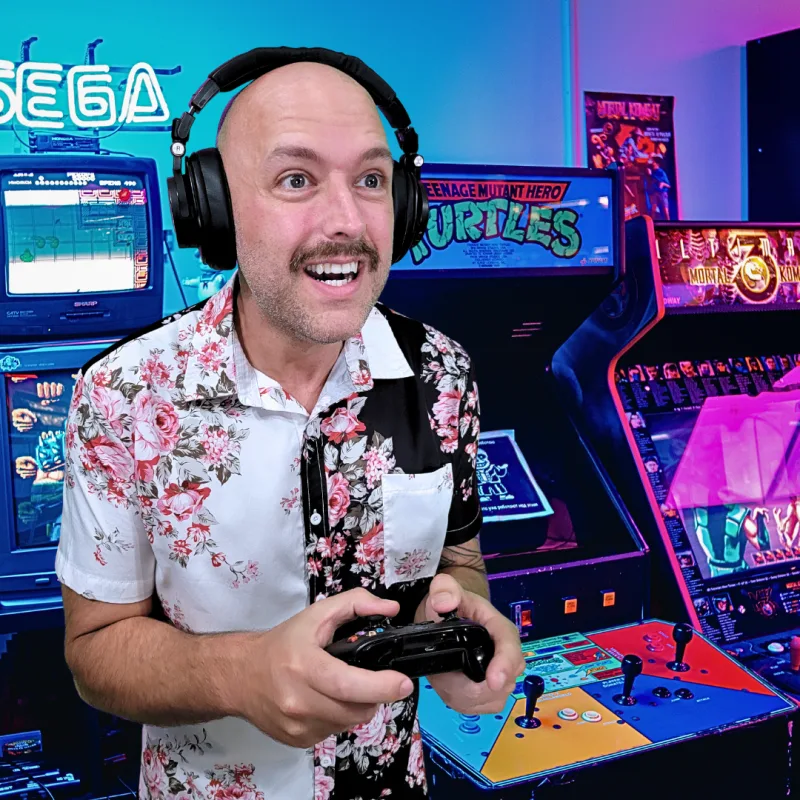
What happens to video games when AI can build entire worlds in seconds?

I’ve been thinking about this a lot lately. Because we’re not talking about some distant future anymore. The tools are here. The technology exists. And it’s going to change gaming in ways most people aren’t prepared for.

Let me break down what I think is coming and why it matters.

Where We Are Right Now

AI can already generate images, music, dialogue, and code. Not perfectly, but well enough that the output is usable with some human polish.

Game developers are starting to use these tools in production. Not to replace human creativity, but to accelerate it. An artist who used to spend days on environment concepts can now iterate in hours. A writer can generate hundreds of dialogue variations to test. A designer can prototype mechanics faster than ever before.

This is phase one. AI as a tool to help humans make games faster.

But phase two is coming. And that’s where things get interesting.

Procedural Generation on Steroids

Remember when procedural generation was a big deal? Games like Minecraft and No Man’s Sky that could create virtually infinite worlds?

AI takes that concept and supercharges it.

Instead of algorithmically generating terrain, AI can generate meaningful content. Quests that make sense. Characters with coherent personalities. Stories that adapt to how you play.

Imagine a game where every NPC has a genuine personality, generated and maintained by AI. Where the world actually responds to your actions in ways that feel intentional, not scripted. Where no two players have the same experience because the game is creating content specifically for you.

That’s not science fiction. That’s what’s technically possible right now. It’s just a matter of someone building it.

The Creator Economy Meets Gaming

Here’s what really excites me.

What if anyone could create a game by describing what they want?

“I want a medieval mystery game where the player is a blacksmith investigating disappearances in their village.”

And the AI builds it. Not a crappy prototype, but an actual playable game with story, characters, environments, and mechanics.

Suddenly game creation isn’t limited to people with technical skills or big budgets. Anyone with an idea can bring it to life.

This democratization happened with other media. YouTube let anyone become a broadcaster. Spotify let anyone become a musician. What happens when anyone can become a game developer?

The Concerns

I’m not naive about the downsides here.

If AI can generate games, what happens to human game developers? The industry already has brutal labor practices. Does AI make that better or worse?

What about quality? Right now AI-generated content has a certain sameness to it. A lack of soul. Will AI games ever have the magic that comes from a human creator’s specific vision?

And then there’s the addiction question. If AI can create perfectly personalized content, content specifically designed to keep YOU engaged, does that become a new form of manipulation?

These are real concerns. I don’t have clean answers to all of them.

What I’m Excited About

Despite the concerns, I’m genuinely excited about where this is heading.

I love games. I’ve been playing them my whole life. And I love the idea that we might be entering an era of unprecedented creativity and variety.

More games than we could ever play. Games that adapt to us instead of forcing us to adapt to them. Games created by people who never would have had the chance to make them before.

Is that utopian? Maybe. But the potential is real.

And as someone who’s building AI tools myself, I find it fascinating to watch another industry grapple with these changes. The questions gaming is asking are the same questions every creative industry is asking.

How do we use AI to amplify human creativity instead of replacing it? How do we preserve what makes human creation special while embracing new capabilities? How do we navigate the transition without losing what matters?

I don’t think anyone has perfect answers yet. But the people asking the questions are the ones who’ll shape what comes next.

What This Means For Players

If you’re a gamer, here’s what I think you should pay attention to.

The games of 2030 are going to look nothing like the games of today. The same way YouTube in 2025 looks nothing like TV in 2005. The medium is evolving.

Stay curious. Try the weird AI-generated stuff that’s starting to appear. Some of it will be garbage. Some of it will hint at something genuinely new.

And don’t be afraid of the change. Yes, some things will be lost. But other things will be gained. The history of technology is the history of trade-offs, and usually the net result is more options, not fewer.

Video games survived the jump from arcades to home consoles. From 2D to 3D. From offline to online. They’ll survive AI too.

They might just become something we can’t quite imagine yet.

If you want to understand more about how AI is transforming our digital lives beyond gaming, or explore how AI is becoming our second brain, check out those posts.

Are you excited about AI in gaming or concerned? I’d love to hear where you land on this. Drop a comment.