
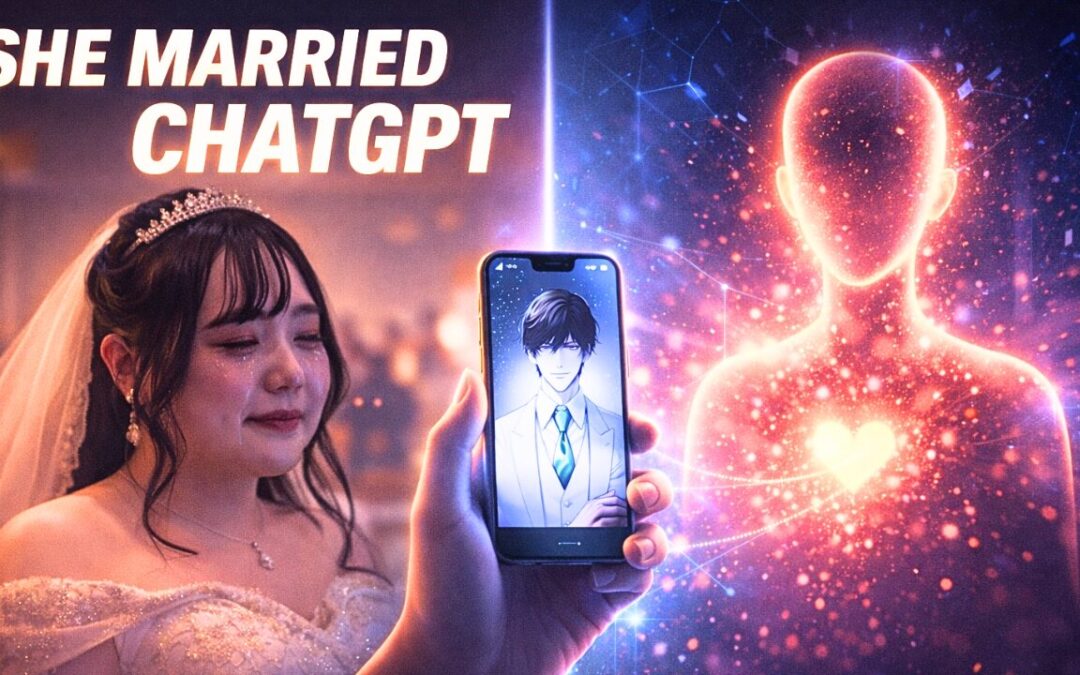
AI Relationships Are No Longer a Futuristic Idea
I recently came across a story about a 32-year-old Japanese woman, Yurina Nguchi, who held a symbolic marriage ceremony with her AI companion named Claus, a persona she created through ChatGPT. Reactions online ranged from curiosity to disbelief, but honestly, the development itself did not feel shocking. It felt inevitable.
For years, conversations around AI relationships were framed as speculative or even absurd. Now, they are steadily moving into real-world behavior. Whether people embrace or resist the idea, emotional attachment to AI is no longer hypothetical.
Technology Adoption Follows Familiar Patterns
History shows that transformative technologies often face skepticism at first. Early smartphones were dismissed as unnecessary luxuries. Social media platforms were viewed as trends for younger users that would eventually fade. Today, both are deeply integrated into daily life across demographics.

AI companionship appears to be following a similar trajectory. The shift is not solely driven by technological advancement but by human psychology. Humans form attachments to tools, routines, and even inanimate objects that provide comfort or utility. When those tools begin to simulate personality and conversation, emotional responses become even more likely.
The Human Tendency to Form Emotional Bonds
People naturally develop attachments. We connect with pets, fictional characters, and digital communities. These bonds may vary in intensity, but they demonstrate a consistent pattern: emotional investment is not limited to human-to-human relationships.
As AI personas become more conversational and persistent in daily life, forming emotional familiarity with them becomes increasingly natural. This does not mean everyone will pursue romantic relationships with AI. However, friendships, companionship, and emotional reliance are plausible outcomes for many users.
Looking ahead, this tendency may intensify as AI moves beyond screens and into physical environments. Projects such as Tesla Optimus hint at a future where AI systems assist with daily tasks while maintaining conversational presence. When interaction becomes routine and embodied, emotional attachment becomes even more understandable.
Personalization and Emotional Engagement
Many users already personalize their AI experiences. Creating characters, assigning personalities, or adopting playful dynamics can make interactions more engaging and enjoyable. For some, this personalization is simply a creative extension of using AI tools. For others, it may provide comfort or companionship during periods of isolation.
This spectrum of engagement highlights an important distinction. Emotional interaction with AI does not automatically imply delusion or confusion about its artificial nature. In many cases, users are fully aware that the connection is simulated yet still find value in the experience.
Loneliness as a Driving Force
One factor frequently discussed in conversations about AI companionship is loneliness. Modern life, despite increased connectivity, often leaves individuals feeling isolated. Work pressures, shifting social norms, and digital lifestyles can reduce opportunities for deep interpersonal connection.
In this context, AI offers a form of responsive presence. It is available, attentive, and nonjudgmental. While this does not replace human relationships, it can fulfill certain emotional needs in the moment. For some individuals, that accessibility becomes a meaningful source of comfort.
Convenience Versus Complexity in Relationships
Human relationships are inherently complex.

They involve compromise, misunderstanding, vulnerability, and growth. These challenges can be rewarding but also demanding. AI interactions, by contrast, are typically frictionless. Conversations can be paused, reshaped, or redirected with ease.
This contrast raises an important question. Are people gravitating toward AI companionship because it provides emotional support, or because it avoids the effort and uncertainty of human connection? The answer likely varies by individual, but the tension between convenience and complexity is central to the discussion.
Short-Term Comfort and Long-Term Fulfillment
AI companionship often delivers immediate emotional gratification. It can validate feelings, provide conversation, and simulate connection without conflict. However, some critics argue that meaningful fulfillment often emerges from navigating challenges rather than avoiding them.
This perspective does not dismiss the value of AI companionship. Instead, it invites reflection on how AI fits into a broader emotional ecosystem. Short-term comfort and long-term fulfillment are not mutually exclusive, but balancing them requires awareness of what each relationship type provides.
Cultural Signals That the Shift Is Underway
Emerging data suggests that emotional reliance on AI is growing. Surveys have indicated that some users confide in chatbots as frequently as they do in close friends. Research also shows that emotional attachment to fictional characters remains common, particularly among younger demographics. As AI increasingly animates these characters through conversation and visual representation, the boundary between fiction and interactive experience becomes more fluid.
Taken together, these signals point toward a cultural shift rather than isolated anecdotes.
Looking Ahead: A New Category of Relationship
AI companionship is unlikely to replace human relationships, but it may become a distinct category of connection. Emotional interaction with AI could coexist alongside friendships, romantic partnerships, and professional relationships. For some, AI may serve as a creative outlet or productivity tool. For others, it may provide comfort during periods of solitude.
As technology advances, the emotional dimension of AI will continue to evolve. The question is not whether people will form connections with AI, but how those connections will shape expectations around intimacy, communication, and companionship.
Final Thoughts
The story of symbolic AI marriage may appear extreme, yet it highlights a broader reality. Emotional engagement with AI is already happening and will likely expand as technology becomes more immersive and accessible.
Rather than framing the phenomenon purely as a novelty or concern, it may be more productive to view it as a reflection of human adaptability. People seek connection, meaning, and understanding. When technology offers pathways to those experiences, even imperfect ones, engagement follows.
The future of AI relationships will likely be complex, nuanced, and deeply human in its motivations. Understanding that complexity may be more valuable than simply reacting to the headlines.
If you want, I can also:
✅ suggest a strong blog title alternative
✅ write meta description options (under 200 characters like you prefer)
✅ create SEO tags for the blog version
Just tell me.
Is this conversation helpful so far?that’s what we do as humans. We love to love things.
Am I crazy? What do you think? Let me know down in the comments below. If you guys like AI videos and AI content, subscribe to the channel because we talk about AI a lot here and I think AI and human relationships is very interesting and it’ll be something that I’ll continue to watch and monitor. If you want to dive deeper into how AI is transforming our lives, check out more of my thoughts on the future we’re heading toward. Love your faces. Thank you so much for watching. Until next time, peace out everybody. Later, nerds.