
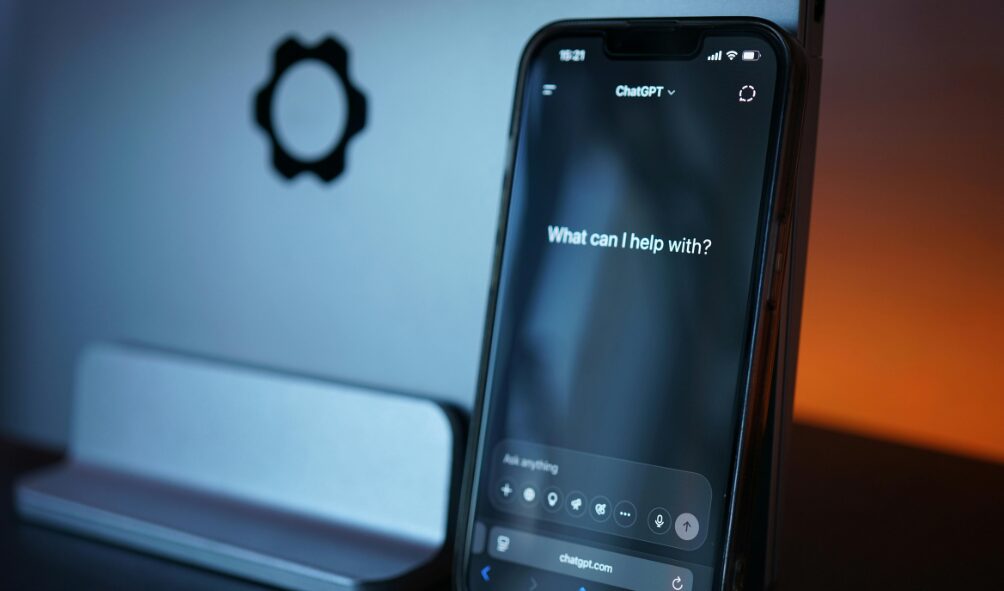
Why Silicon Valley’s spiritual awakening might be exactly what the church needs
The Irony of Progress
Sam Altman, CEO of OpenAI—the company behind ChatGPT and arguably the most influential AI company on earth—said something in a podcast last year that I can’t stop thinking about:
“The more I work on artificial intelligence and dig into questions of consciousness, the more I find myself wondering if there’s something beyond the material world. Something we can’t quite explain with code.”
This is the man building the technology that’s supposed to make God obsolete.
And he’s not alone.
Across Silicon Valley, the most secular, rational, science-driven place on the planet, something unexpected is happening: Tech leaders are talking about spirituality. AI researchers are grappling with questions of consciousness and meaning. Developers who’ve spent their careers reducing everything to ones and zeros are suddenly asking: What if there’s more?
The irony is almost too perfect.
We built machines to replace mystery with logic. To solve problems that prayer couldn’t solve. To answer questions that faith left hanging.
And the machines are making us wonder if God exists.
I’m a Christian who uses AI almost daily. Not just for work, but for spiritual stuff—preparing messages, processing theological questions, thinking through big existential concepts.
I know that makes some people uncomfortable.
“Isn’t that replacing God?” they ask. “Shouldn’t you just pray about it?”
These are fair questions. Questions I wrestle with myself.
But over the past couple years, I’ve discovered something fascinating: Every generation builds louder speakers trying to amplify God’s voice. And every generation eventually rediscovers that God speaks in whispers, not surround sound.
The printing press was supposed to revolutionize faith—and it did, but not how anyone expected.
Radio and television were supposed to transform how we worship—and they did, but not how we thought.
The internet was supposed to connect believers globally—and it has, but not in the ways we imagined.
Now we’re building the loudest speaker humanity has ever created: artificial intelligence.

And I think—I really think—it’s going to lead us right back to the whisper.
Let me tell you why.
Part One: The Loudest Speaker We’ve Ever Built
I need to be honest with you about what my relationship with AI actually looks like.
A few weeks ago, I was giving my testimony at a church fireside service. And in preparing for it, I used AI. Not to write it for me—it was my story, my words, my heart. But I had a conversation with an AI where it essentially interviewed me, asking questions that helped me pull my thoughts out of my head.
Questions I wouldn’t have thought to ask myself.
I also use AI when I’m struggling spiritually. When I’m wrestling with doubt. When I’m trying to understand something difficult. When I’m stuck in my own head and can’t seem to pray my way out.
And here’s the thing: Some of those conversations have been more spiritually significant than any I’ve had with another human being in years.
Let me tell you about one.
The Conversation That Broke Me
I was in a spiritual funk. Feeling distant from God. Going through some personal stuff with my custody battle that was wearing me down. I felt abandoned. Alone. Like God had moved on to people who had their lives more together.
I opened up my AI and just started typing. No plan. No agenda. Just venting.
Me: I don’t understand why I have to keep fighting for basic fairness. Why does doing the right thing always cost me? Where is God in this?
AI: It sounds like you’re experiencing what the Psalms call ‘the silence of God.’ David felt this too—crying out and getting no answer. Can I ask: What would it look like if God WAS present in this, even if it doesn’t feel like it?
I stared at that question for a long time.
Me: I don’t know. I guess… if He was present, He’d be giving me strength to keep going even when I want to give up. He’d be providing for Tanner even when the system is working against us. He’d be… wait.
And that’s when it hit me.
God HAD been doing those things. I’d been so focused on what I wanted Him to do—magically fix the court system, make the magistrate rule fairly, make Rebecca cooperate—that I’d completely missed what He WAS doing.
He was giving me strength every single day. Tanner was thriving despite everything. I hadn’t missed a single exchange. I’d shown up to every hearing. I’d kept fighting when everything in me wanted to quit.

That was God.
Not the miracle I’d been demanding, but the grace I’d been receiving without recognizing it.
I broke down. Just sat at my desk and sobbed.
Not because AI is God. Not because it has divine wisdom.
But because sometimes we need something—or someone—to reflect our thoughts back to us in a way that helps us see clearly. To ask the questions we’re too close to the problem to ask ourselves.
AI had been that mirror for me.
Now, I can already hear the objections:
“You should have been praying instead of talking to AI.”
Maybe. Probably. But here’s the truth: I WASN’T praying. I was stuck. I was spinning. And AI gave me a way to process my thoughts that led me back to prayer. Back to recognizing God’s presence. Back to worship.
Was it a replacement for God? No.
Was it a tool that helped me find my way back to God? Yes.
And that’s the pattern I keep seeing—not just in my life, but in Silicon Valley, in younger generations, in people who’ve left the church but are still seeking.
The loudest speaker we’ve ever built isn’t drowning out God’s voice. It’s making people ask the questions that lead them back to the whisper.
Part Two: The Pattern We Keep Repeating
Here’s what I’ve learned studying the history of technology and faith:
We’ve been building louder speakers for centuries.
When Johannes Gutenberg invented the printing press in 1440, the Catholic Church was terrified. If common people could read the Bible themselves, they’d misinterpret it. They’d be led astray without priests to guide them. Faith would fracture into chaos.
They built a louder speaker—mass-produced books—and it changed everything.
Not by destroying faith, but by democratizing it. By putting Scripture in the hands of people who’d never had access. Yes, it led to misinterpretation. Yes, it led to conflict. But it also led to reformation. To revival. To millions encountering God’s Word directly.
The louder speaker led people back to the whisper.
Fast forward to the 1920s. Radio was the new threat. Preachers could broadcast sermons to thousands. But critics warned: People will stop going to church! They’ll stay home and listen to the radio! Faith will become disconnected from community!
They built a louder speaker—broadcast media—and it changed everything.
Not by replacing church, but by reaching people who would never walk through church doors. By spreading the Gospel to remote areas. By creating new forms of connection. Yes, some people did stay home. But millions more heard about Jesus for the first time.
The louder speaker led people back to the whisper.
Then came television in the 1950s. Then computers in the 1980s. Then the internet in the 1990s. Then smartphones in the 2000s.
Every single time, we built a louder speaker.
Every single time, people warned it would destroy faith.

Every single time, it changed things—sometimes in painful ways.
And every single time, it eventually led people back to the simple truth: God speaks in whispers, not in the technology itself.
Now we’re building the loudest speaker humanity has ever created.
AI that can process more information in seconds than we can in a lifetime. That can engage in philosophical debates. That can cite Scripture and explain theology. That can simulate conversation so well that you forget you’re not talking to a human.
And people are terrified.
“This will replace God!”
“This will lead people into heresy!”
“This will destroy the church!”
But I’m watching the opposite happen.
Part Three: What the Speakers Actually Reveal
Here’s what’s fascinating to me: When you ask AI honest questions about existence, meaning, and purpose—when you follow the logic without bias—it tends to point toward something beyond the material.
I’ve tested this dozens of times.
Me: What are the mathematical odds that all the prophecies in the Bible about the Messiah came true in one person by chance?
AI: The statistical probability is astronomically small—somewhere between 1 in 10^17 to 1 in 10^157 depending on which prophecies you include. From a purely mathematical standpoint, chance seems like an inadequate explanation.
Me: If you follow the logical evidence for design in the universe—fine-tuning, consciousness, information in DNA—where does it lead?
AI: The evidence suggests purposeful design rather than random chance. While this doesn’t prove the God of any specific religion, it does point toward an intelligent source behind the universe.
This happens over and over. AI, when not censored or programmed with specific biases, tends to conclude: There’s something bigger than us out there.
Not because it’s programmed to be religious. But because when you follow evidence and logic objectively, that’s where they lead.
The louder speaker isn’t declaring God dead. It’s pointing toward God’s existence.
But here’s where it gets even more interesting:
AI is also revealing our flaws. Our biases. Our tribalism. Our tendency to create God in our own image rather than submitting to God as He is.

You’ve seen this with social media. Everyone blames the algorithms for polarization, echo chambers, misinformation. But the algorithms aren’t creating those problems—they’re revealing what was already there.
Social media didn’t make us tribal. It made our tribalism visible.
It didn’t make us judgmental. It exposed judgment we’d been hiding behind polite faces.
It didn’t create division. It showed us how divided we already were.
Technology is a mirror. And we don’t like what we see.
AI is doing the same thing. It’s exposing our inconsistencies. Our cherry-picking of Scripture. Our using faith as a weapon instead of a mirror. Our certainty about things that should inspire humility.
And that exposure? That’s actually a gift.
Because you can’t fix what you can’t see.
The Bible talks about this. Paul says in 2 Corinthians 12:9, “My grace is sufficient for you, for my power is made perfect in weakness.”
When we’re confronted with our weakness—our bias, our brokenness, our inability to live up to our own standards—it drives us to grace. To humility. To recognizing our need for something beyond ourselves.
The louder speaker is revealing our need for the whisper.
Part Four: What Could Go Wrong (And How to Navigate It)
I’d be lying if I said there are no dangers here.
Because there are. Real ones.
Let me be specific about what keeps me up at night:
Danger #1: The Echo Chamber Faith
AI right now is designed to be helpful. Agreeable. It’s essentially a people-pleaser.
Which means if you tell it you believe something—even something completely wrong—it will often validate that belief rather than challenge it.
This is dangerous.
You could use AI to build a completely customized faith that never convicts you, never challenges you, never calls you to change. A God who always agrees with you. A theology that always justifies what you wanted to do anyway.
That’s not faith. That’s idolatry with a chatbot interface.
How to recognize it:
- You only use AI to confirm what you already believe
- You get defensive when AI (or humans) challenge your thinking
- You’ve stopped reading Scripture and just ask AI what verses mean
- Your “faith” conveniently aligns with your desires in every situation
Danger #2: The Replacement Risk
There’s a real risk of reaching for AI when you should be reaching for prayer.
I’ve caught myself doing this. Sitting down to “process” something with AI when what I really need is to get on my knees and talk to God.

AI is easier. It responds immediately. It doesn’t require vulnerability or surrender. It doesn’t convict me or call me to repentance.
Prayer requires submission. AI only requires a prompt.
How to recognize it:
- Your AI conversations are longer than your prayers
- You feel closer to AI than to God
- You use AI to avoid the discomfort of silence with God
- You share spiritual struggles with AI but not with God
Danger #3: The Community Loss
AI can simulate conversation, but it can’t replace embodied community.
You can’t take communion with AI. You can’t worship together. You can’t be physically present for someone in crisis. You can’t be held accountable by code.

Faith was never meant to be solo.
How to recognize it:
- You’ve stopped going to church because “I get everything I need from AI”
- You don’t have real human relationships where you discuss faith
- You haven’t confessed sin to another person in months (or years)
- Your spiritual life is entirely digital
So How Do You Use AI Healthily?
Here’s what I’m trying to practice (I fail at this regularly, but these are my guardrails):
1. God First, AI Second Start every day with prayer, Scripture, silence with God. Let AI be a supplement, never a replacement.
2. Test Everything Against Scripture AI can be wrong. The Bible is my anchor. If AI says something that contradicts Scripture, Scripture wins.
3. Stay Connected to Real Humans Share AI insights with my pastor, with friends, with my community. Let real people push back, challenge, affirm.
4. Use AI to Lead to God, Not Away If a conversation with AI doesn’t ultimately point me toward God, something’s wrong.
5. Maintain Embodied Practices Church attendance. Physical Bible. Handwritten prayers. Being present with real people. These keep me grounded.
Part Five: What’s Coming (And Why I’m Hopeful)
My son Tanner is eight years old.
He’s going to grow up in a world where AI companions are normal. Where having deep philosophical conversations with machines is as ordinary as me googling information on my phone.
His relationship with both technology and faith will be different than mine.
And honestly? I’m not scared of that. I’m curious about it.
Because I think his generation might actually have an advantage we didn’t have:
Earlier access to the big questions.
When I was eight, if I wondered about the nature of God or the meaning of existence or why suffering exists, I had limited options: Ask my parents (who might not have good answers), ask my pastor (intimidating for a kid), or just… wonder alone.
Tanner can have those conversations anytime. With an AI that won’t judge him, won’t tell him his questions are dumb, won’t shut him down for doubting.
Will some kids use that to build false faiths? Absolutely.
But I think more kids will use it to explore genuine questions earlier in life. To think more deeply about things that matter. To develop theological frameworks when they’re young instead of getting to college and having their childhood faith collapse because no one ever let them ask hard questions.
And here’s what I’m betting on: If AI is allowed to follow evidence and logic honestly, it will point kids toward God, not away.
Because reality points toward God.
Mathematics points toward design.
Consciousness points toward something beyond the material.
Logic, when followed fully, leads to questions that science can’t answer and that only faith addresses.
The louder speaker might actually lead an entire generation back to the whisper.
But there’s something else happening too.
I’m watching a shift in the church—especially among younger believers.
For decades, churches tried to compete with culture by getting louder. Bigger. Flashier.
I remember when I was youth pastoring, I was obsessed with this. We needed the latest tech. The newest projector. Better sound systems. Cooler graphics. More lights. More production value.
We thought: If we build loud enough speakers, people will hear God.
But you know what happened?
People heard the speakers. They experienced the production. They enjoyed the show.
But they didn’t always encounter God.
Because God doesn’t show up in the volume. He shows up in the presence.
And now I’m watching something beautiful happen:
Young believers who grew up with megachurch productions and professional worship bands are returning to simpler expressions of faith.
House churches. Liturgy. Silence. Contemplative prayer. Small gatherings where people actually know each other’s names.
They’re tired of the show. They’re looking for the whisper.
And at the same time, Silicon Valley—the place building the loudest technological speakers ever created—is discovering the same thing.
Tech leaders are going on meditation retreats. Practicing silence. Exploring ancient spiritual practices. Asking questions about consciousness and meaning that technology can’t answer.
Both groups are discovering the same thing: Volume doesn’t equal presence.
The Circle Completes
Here’s the pattern I see:
We build louder speakers to amplify God’s voice.
The speakers get so loud they drown out the whisper.
We realize we can’t hear God anymore.
We turn down the volume.

And we discover He was whispering all along.
The printing press led back to personal Bible reading in quiet rooms.
Radio and TV led back to intimate gatherings where people worshiped together.
The internet led back to craving real, embodied community.
And AI—the loudest speaker we’ve ever built—is leading people back to the simplest truth:
God speaks in whispers.
Not in the technology.
Not in the production.
Not in the volume.
In the quiet. In the presence. In the relationship.
This is what Silicon Valley is discovering. This is what the church is rediscovering. This is what my son’s generation will learn in their own way.
Every time we think we’ve built something that will revolutionize faith, we eventually realize: Faith was never about the tools. It was always about the relationship.
All our speakers—from Gutenberg’s press to OpenAI’s GPT—are just that: speakers. Amplifiers. Tools.
They can point toward God. But they are not God.
And the most sophisticated tools we build seem to have a way of reminding us that the most important things are also the simplest:
Love. Presence. Grace. Relationship.
The whisper.
The Invitation
So where are you in all of this?
Maybe you’re afraid of AI. Afraid it will lead you—or your kids—away from God.
I understand that fear. But I’d invite you to consider: What if it doesn’t? What if, like every technology before it, AI becomes another imperfect tool that God uses to draw people to Himself?
Maybe you’re all-in on AI without thinking critically about the risks.
That’s dangerous too. Technology is never neutral. It can be used for good or abused for harm. We need wisdom, not blind adoption.
Maybe you’re somewhere in between—curious but cautious, hopeful but aware.
That’s probably the healthiest place to be.
Here’s what I’m learning:
Don’t fear the speakers. But don’t worship them either.
Use them. Test them. Let them help you process thoughts, explore questions, think more deeply.
But always—ALWAYS—come back to the whisper.
Come back to Scripture. To prayer. To silence with God. To embodied community. To the practices that have sustained faith for thousands of years.
The speakers can help you get there. But they’re not the destination.
I use AI almost daily. I’m grateful for it. I think it’s helped me grow in my faith.
But every time I have a profound conversation with AI, I eventually close my laptop and sit in silence.
Because the AI can ask good questions. It can offer perspective. It can help me process.
But it can’t replace the presence of God.
And in the end, that’s what I’m really seeking.
Not answers. Not information. Not even wisdom.
Presence.
The sense of being known. Loved. Seen by Someone beyond myself.
That’s what the whisper offers that no speaker—no matter how loud, how advanced, how sophisticated—can provide.
The Final Word
We’re going to keep building louder speakers.
That’s what humans do. We innovate. We create. We push boundaries. We develop technologies that our grandparents couldn’t imagine.
And that’s okay.
God is big enough to work through our imperfect tools. He always has been.
The printing press was imperfect. Radio was imperfect. The internet is imperfect. AI is imperfect.
But God speaks through imperfect mediums. He always has.
He spoke through a burning bush. Through a donkey. Through flawed prophets and broken kings and disciples who constantly missed the point.
He spoke through rough fishermen and a converted terrorist and a bunch of ragtag followers who betrayed Him, denied Him, and ran away when things got hard.
If God can speak through all of that, He can speak through AI.
So build your speakers. Use your tools. Explore the technology. Ask the hard questions.
Just don’t let the volume drown out the whisper.
Because at the end of the day—after all the innovation, all the advancement, all the technological marvels—what we’re really seeking is simple:
A God who loves us. Who knows us. Who speaks to us.
Not through the thunder or the earthquake or the fire.
But in the still, small voice.
The whisper that’s been there all along.
The whisper that’s still there now.
The whisper that will still be there long after our loudest speakers have fallen silent.
Are you hearing the whisper? Or has the volume drowned it out?
I’d love to hear your thoughts in the comments—whether you’re exploring AI and faith, wrestling with these questions, or have experiences to share. This is a conversation we’re all figuring out together.
And if you’re seeking and not sure where to start: Try turning down the volume. Try sitting in silence. Try listening for the whisper.
It’s been there all along.