
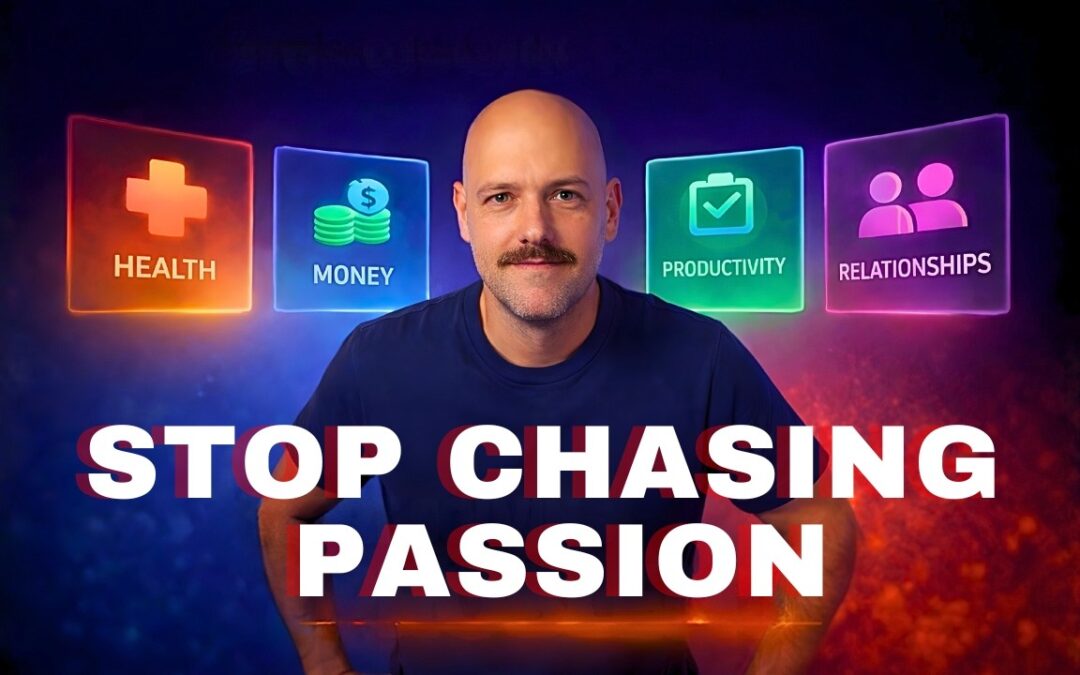
Everyone tells you to follow your passion, chase what you love, find your bliss and the money will follow, and I did that for like four years, built businesses around things I genuinely loved, you know like streaming, gaming tools, content creation, all of it, and you know what happened? I failed. Repeatedly. Not because the ideas were bad and not because I wasn’t working hard enough, but because passion is fickle, you know, passion fades when things get hard and boring and you’re doing the same thing for the hundredth time and there’s nothing exciting about it anymore.
Then I stumbled on something that kinda changed everything for me and I want to talk about it because I think most purpose and goal-setting advice has it completely backwards, like I don’t know if you’ve noticed but literally everyone giving advice about finding your calling starts with the same question, “what do you love doing?” and I think that’s the wrong question, not that it’s useless or anything, but I think there’s a better one.
I stopped asking “what do I love” and started asking “what pisses me off.” That shift, from passion to problems, that’s what I want to dig into today.
The Passion Trap I Kept Falling Into
Okay so here’s my story and I’m sharing this because I genuinely think a lot of you are in the same place I was, so bear with me. I loved streaming, like genuinely loved it, the community, the games, building something live with an audience, the whole thing, so I built Click Consultants originally to help streamers grow and it made sense, right, follow the passion, build something around what you love.
And it kind of worked for a little while. I got some clients, made a little bit of money, was excited about it at first, you know. But there was this thing in the back of my mind I just couldn’t shake and it took me a while to even figure out what it was, I mean looking back it’s obvious but when you’re in it you don’t always see it clearly, and what it was is that I wasn’t excited anymore, the passion that got me started wasn’t enough to keep me going when things got boring, when it was 11 PM and I had to edit yet another video for a client who wasn’t even that engaged in growing anyway, when the same problems kept showing up over and over and I was just going through the motions or whatever.
And before Click Consultants I had Streamliner.gg, which was a SaaS product for livestreamers, built tools to help them manage their channels and their content and all that, and same story, I was passionate about streaming, built the thing, got some traction, and then somewhere along the way the excitement just kind of evaporated and I was left with just the work and none of the feeling that got me there, you know what I mean.
This wasn’t unique to those businesses either, I’ve done this pattern multiple times throughout my life, you know, get excited about something, start building, watch the excitement fade, wonder why I don’t have the motivation anymore, feel like something’s wrong with me, and start the whole cycle over again with something new. Sound familiar? Because I’ve talked to a lot of people who are doing the exact same thing and they think they’re the problem, like they think they just don’t have discipline or willpower or whatever, but I don’t think that’s actually it. If this resonates, I wrote about the specific rules I had to break to stop repeating this cycle — worth a read if you’re stuck in it right now.
I think the problem is what you’re building on. Passion is a foundation made of sand, is basically the best way I can put it.
Why Problem-Solving Beats Passion: What I Eventually Figured Out
Passion is about what you love doing, but life isn’t about doing things you love, at least not all the time, life is about solving problems that matter, problems that make you feel like your existence actually means something, and the crazy thing is when you solve problems that genuinely matter to you, the passion starts showing up on its own, you know, it kinda comes as a byproduct instead of the starting point.
I have this document I call my TELOS file, basically my life operating system I guess is the best way to describe it, and I’ll link a full video on the whole framework below if you wanna go deep on how I set it up, but the key thing, the thing that actually changed how I approach everything, is that it starts with problems, not passions, not dreams, not “what would you do if you knew you couldn’t fail” or any of that stuff, but problems, things that piss you off about the world.
And I know that sounds kinda negative or cynical or whatever, like “Derek just told me to be angry about stuff,” but that’s not really what I mean, I mean there’s a difference between being bitter about the world and being motivated by what’s broken in it, you know, and once I started thinking about it that way everything kind of clicked for me.
The thing about problems versus passions is this, and I think this is the core of it really, passion is emotional and emotions are temporary, but problems are structural and structural things don’t go away just because you’re having a bad day or you’re tired or you’re not feeling inspired or whatever. Problems persist. And your frustration with them persists too.
My Four Problems
So here are my four problems that drive basically everything I do now, and I’ll be honest, when I first wrote these down they felt almost too simple, like I kept expecting them to be more sophisticated than they are, but I think that’s kind of the point, if you’re struggling to articulate your problem in plain language it’s probably not the right one, you know.
Problem one: Society is lost, anxious, and divided because people turned from God and the church has failed to bring them back.
I grew up in church, I was in ministry, I got removed from ministry over stuff that I don’t need to get into right now, and I spent like 12 to 15 years away from faith entirely, and when I came back a few years ago and started seeing what was happening in the world, you know the anxiety epidemic, the isolation, people are more connected digitally but more alone than ever, and I just kept thinking the church could be the answer to so much of this but it’s failing at its own mission, and that makes me genuinely angry in a way that hasn’t gone away, you know.
Problem two: The middle class is being crushed by endless taxes, hidden fees, interest, and a system that’s basically rigged against working families.
I mean again, this one’s pretty self-explanatory and I think most of you reading this feel it, you work hard, you do the right things, and somehow you’re still falling behind, and I think about my own journey and the financial hits I’ve taken and how hard it is to actually build wealth in a system that kinda seems designed to keep you spending more than you’re saving or whatever.
Problem three: Family courts destroy fathers and harm children by defaulting against dads, forcing them to fight and literally pay for basic parental rights that mothers just automatically have.
I’ll get into this more in a second but this one is deeply personal and it’s probably the one that produces the most fuel for me if I’m being honest.
Problem four: Most people don’t understand emerging technology and they’re gonna get left behind as the world changes faster now than it ever has before.
And I think about this one a lot because I spend like every day building with AI tools, automating things, watching what’s happening in this space — I actually wrote a whole post about how I built my own personal AI operating system if you want to see what that actually looks like in practice — and I have friends and family members who are completely unaware of what’s coming and what it means for their jobs, their income, their ability to compete in the next economy or whatever, and it genuinely concerns me, you know.
None of these are “I love content creation.” None of these are “I’m passionate about building tools.” These are things that make me angry, things I’ve lived through, things I’ve seen, things I genuinely cannot stop thinking about even when I want to.
Wounds Create Fuel That Passion Never Could
Okay so this is the part I want you to really sit with, because I think it’s the thing most people skip over when they’re trying to figure out their purpose and it’s also honestly the hardest part to talk about, so bear with me here.
I literally spent $250,000 fighting for 50/50 custody of my son Tanner and I want you to let that number actually land for a second because I know when people hear big numbers they kind of gloss over them, but that’s two hundred and fifty thousand dollars, not just in lawyer fees but in all of it, the court costs, the therapy, the lost work hours, the years of my life that went into that fight, two years in court, two years of my life consumed by a custody battle, and I still to this day have my ex fighting things trying to take away rights I shouldn’t even have to fight for, you know. If you want to understand just how broken the math is on standard custody arrangements, I broke down exactly how few days “every other weekend” actually gives a father with his kid — the numbers will make you sick.
That’s not passion. That’s a wound. And wounds create a very different kind of fuel, you know, it’s the kind of fuel that doesn’t run dry at midnight when you’re tired and don’t want to work anymore, because here’s the thing about problems versus passions and this is the key thing I want you to take away from this post, passion is fun when things are fun, but when things get hard, when it’s late and you’re exhausted and you’ve been staring at the same problem for three hours, passion goes quiet, it just kind of disappears, and you’re sitting there wondering why you ever cared about this in the first place.
Problems don’t go quiet. The thing that pisses you off is still gonna piss you off at midnight. The injustice you experienced is still unjust when you’re tired. The broken system is still broken whether you feel motivated or not. That’s the difference and it’s a massive one once you actually experience it.
And the second thing, the thing I didn’t fully expect when I made this shift, is that problems connect you to other people in a way that passion never really could. When I talk about how much I love making content, nobody cares, and I mean that genuinely not as self-deprecation, I mean it’s just self-indulgent, you know, “I love creating” is not a thing that makes someone feel less alone. But when I talk about fathers getting destroyed by family courts, suddenly I’m not alone, suddenly there’s a whole community of people who’ve lived the same fight, who’ve sat in that same courtroom, who’ve spent money they didn’t have just to see their own kid. Problems create tribes. Passion creates hobbies. That’s it.
How to Find Your Problems (The Practical Part)
Okay so here’s the practical part and I’m gonna try to be actually useful here and not just hand you a generic journaling prompt or whatever, so stick with me.
Grab a piece of paper or open your notes app and write down what frustrates you about the world, and I mean actually frustrates you, not what you think you’re supposed to be frustrated about or what sounds good or noble or whatever, but what actually makes you angry when you read the news, what injustice have you personally experienced that you wish someone had already solved, what system or process or industry feels broken in a way that has actually affected your real life, not just in theory but in a way you felt in your gut.
Write down three to five things and don’t filter yourself, don’t think about whether they’re realistic or marketable or too controversial or any of that stuff yet, just get them down. (If you want a deeper starting point for this kind of self-inventory, these 15 self-reflection questions are genuinely useful for cutting through the noise and getting to what actually drives you.)
Now here’s the filter and this is where it actually gets interesting. Look at your list and ask yourself two questions.
Question one: Which of these problems do I have credibility to speak about? And I want to be clear here, I’m not asking which one would you be an expert in because that’s kind of a trap and honestly a lot of the best voices on important problems are people who just lived them, not people with credentials, I mean I don’t have a law degree but I know more about family court than most lawyers because I was in it for two years, you know. So which ones have you actually lived? Which ones can you speak about from experience and not just from what you read somewhere?
Question two: Which of these problems do you actually care about fixing? Not which one could make money, I mean I know that’s where your brain goes and that’s fine, money matters, but if money is the only reason you’re interested in a problem you’re gonna abandon it the second something more profitable comes along, and then you’re right back in the passion trap just with a different frame on it. Which one would you still care about 10 years from now even if it never paid a dime? Which one are you gonna be thinking about at 2 AM whether you want to be or not?
And look, once you’ve got that list narrowed down, the next question is what can you actually DO about it, you know, what’s the thing you can build or create or say or contribute that starts chipping away at that problem, and it doesn’t have to be huge, it doesn’t have to be a fully formed business plan, sometimes it starts with just talking about it, just being the person who says “this thing is broken and here’s why” and seeing who shows up, because they will show up, trust me on that, because other people have the same wound and they’ve been waiting for someone to name it out loud.
This Is the Work That Actually Sticks
I want to close with this because I think it’s the thing that ties it all together, you know, I’m not saying passion is worthless, if you love something that’s a gift and you should absolutely build with it, but if you’re like me, if you’ve chased passion for years and still feel like you’re wandering and you can’t figure out why you can’t seem to make anything stick, try flipping the question, stop asking what you love and start asking what pisses you off.
Your problems are not your baggage. Your wounds are not your weakness. They’re actually the thing you have that nobody else has in quite the same combination, they’re specific to your life, your experience, your story, and the world doesn’t need another person who’s “passionate about entrepreneurship” or whatever, you know, there’s no shortage of those, but there might be exactly a shortage of you with your specific set of experiences and frustrations and fire, you know what I mean.
The stuff I’m building now, the content I’m making, the systems I’m putting together, it all comes back to those four problems I listed, and that alignment is the thing that makes it feel sustainable in a way that building around passion never did, because I’m not asking myself if I feel inspired today, I’m asking if the problem I care about is still broken, and spoiler, it always is, so I always have a reason to keep going.
If you want to go deeper on the TELOS framework and how I actually structure my life operating system around problems instead of goals, I’ve got a full video on that below, and if this resonated with you drop a comment, I’m genuinely curious what problems are driving you or what problems you’ve been sitting on and haven’t done anything with yet, because I read those and I respond, you know, that conversation is actually worth having.